Plumbing repairs
Toilet Leaking Around the Base? Why the Source Matters Before Resealing
A toilet leaking from the bottom does not automatically mean the pan needs resealing. It may be travelling down from a supply connection or cistern, escaping from the waste connection, or coming from another bathroom source. The Northern Beaches Plumber checks where and when the water appears before recommending a repair. If flushing brings more water onto the floor, stop using that toilet.
Key takeaways
- A puddle at the base does not identify the failed connection.
- Note whether water appears during flushing or while the toilet is idle.
- Adding sealant can hide the symptom without repairing the leak.
- Treat suspected wastewater as contaminated and keep people clear.
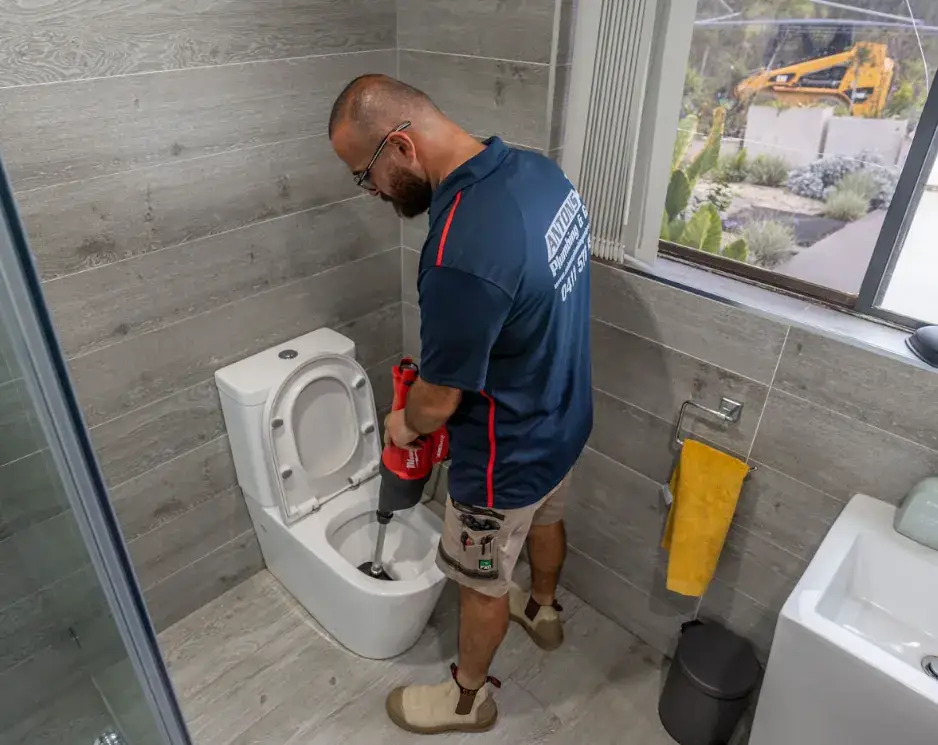
Start with the timing, not a tube of silicone
A leak that appears while the cistern refills points the investigation in a different direction from water escaping during a flush. Water present overnight may involve a continuously pressurised connection. These patterns help the plumber decide what to inspect, but they are not a reliable home diagnosis.
If the floor is already wet, take a photograph from a dry, safe position. Record the last normal use and whether the cistern, hose or wall behind the toilet also looks wet. Do not repeatedly flush to demonstrate the fault, especially if water has reached a doorway or the room below.
Toilet leaking at the base: why resealing may miss the cause
The joint where the toilet meets the floor is not the same thing as the toilet’s water-supply or waste connection. Covering the outside edge does not repair a split connector, a damaged fitting or a leak higher up. It can also make the next inspection less straightforward.
A moving pan needs assessment too. Do not try tightening fixings hard enough to stop movement: ceramic can crack, and the connection underneath may already be affected. Keep the toilet out of use if it is unstable or leaking wastewater.
What we inspect before deciding on the repair
Supply and cistern connections
The accessible water connection, isolation point, cistern and seals help establish whether clean supply water is reaching the floor. Existing corrosion, damage and access affect whether a component repair is sensible. A hose replacement and a cistern repair are different scopes.
Pan, waste connection and nearby fixtures
The plumber considers the pan condition, mounting and waste connection, along with other possible sources such as shower water. Removing a toilet may be needed to inspect a concealed connection, but that should be explained before work proceeds. Our Northern Beaches plumbing repairs service covers the assessment and agreed repair.
Keep the property details with the booking
Send the toilet brand or model if visible, photographs of the whole fixture and the location of the wet area. Mention whether it is a concealed cistern and whether another usable toilet is available. Those details help plan access and possible parts without promising a diagnosis from a photo.
In a strata property, report water affecting another unit or common areas promptly. The NSW Government’s strata repair guidance distinguishes common-property maintenance from work inside a lot. Responsibility depends on the affected item and scheme arrangements; the position of the puddle alone does not settle it.
If the water appears after showering instead, our guide to plumbing leaks and shower waterproofing symptoms can help you describe the timing clearly.
Do not let fresh sealant hide the evidence
Tell the plumber whether water appears during filling, after flushing or when the toilet has not been used. Also report movement in the pan and any moisture higher up. These observations help distinguish connections and components. A cosmetic seal around the base should not be treated as proof that the leaking source has been repaired.
Quick check
What should I tell the plumber first?
Explain whether the leak follows flushing, refilling or showering; whether the pan moves; whether wastewater is suspected; and whether another bathroom or unit is affected. Stop using the leaking fixture rather than testing it again.
Frequently asked questions
Does a leaking base mean I need a new toilet?
Not necessarily. The fault may be in a replaceable connection or cistern component. Pan damage, parts availability and installation condition influence the recommendation.
Can I keep using it if the puddle is small?
Avoid using a toilet that leaks onto the floor when flushed or is unstable. A small visible puddle does not show how much water may be reaching concealed areas.
Does clear water on the floor prove it is clean supply water?
No. Appearance alone cannot establish the source. Avoid contact and have the leak traced before using the toilet again.
Why does the cistern keep topping up?
Water may be escaping into the bowl or the inlet may not shut correctly. Assessment should distinguish filling from flushing faults.
Can I keep flushing to test a blockage?
No. Repeated flushing can cause overflow. Stop using the affected toilet and report whether other fixtures are backing up.
Should I send the brand and model before booking?
Yes, if available without dismantling anything. Photos of the suite and accessible label help identify possible parts and access needs.
Does the wall need opening for every cistern repair?
No. Access depends on the design. Concealed cisterns may have a service opening, but the model and fault need checking.
Will resealing the base fix every toilet leak?
No. Surface sealing can conceal water without repairing the source. Check the connections, cistern and pan before resealing.
What should be checked after a toilet repair?
Ask for checks of filling, shut-off, flushing, stability and accessible connections appropriate to the work completed.
Can a slow refill indicate a supply restriction?
Yes. The local valve, inlet fitting or wider supply may restrict flow. Report whether other cold-water outlets are also weak.
Conclusion
Find the water’s source before resealing the toilet base. A targeted assessment helps separate a connection repair from pan replacement and gives you a clearer scope for the work.
We’re The Northern Beaches Plumber, operated by Antons Plumbing & Gas. Our toilet repairs on the Northern Beaches can help you plan the next step. Tell us when the leak appears and send clear photos so we can discuss an assessment and access.