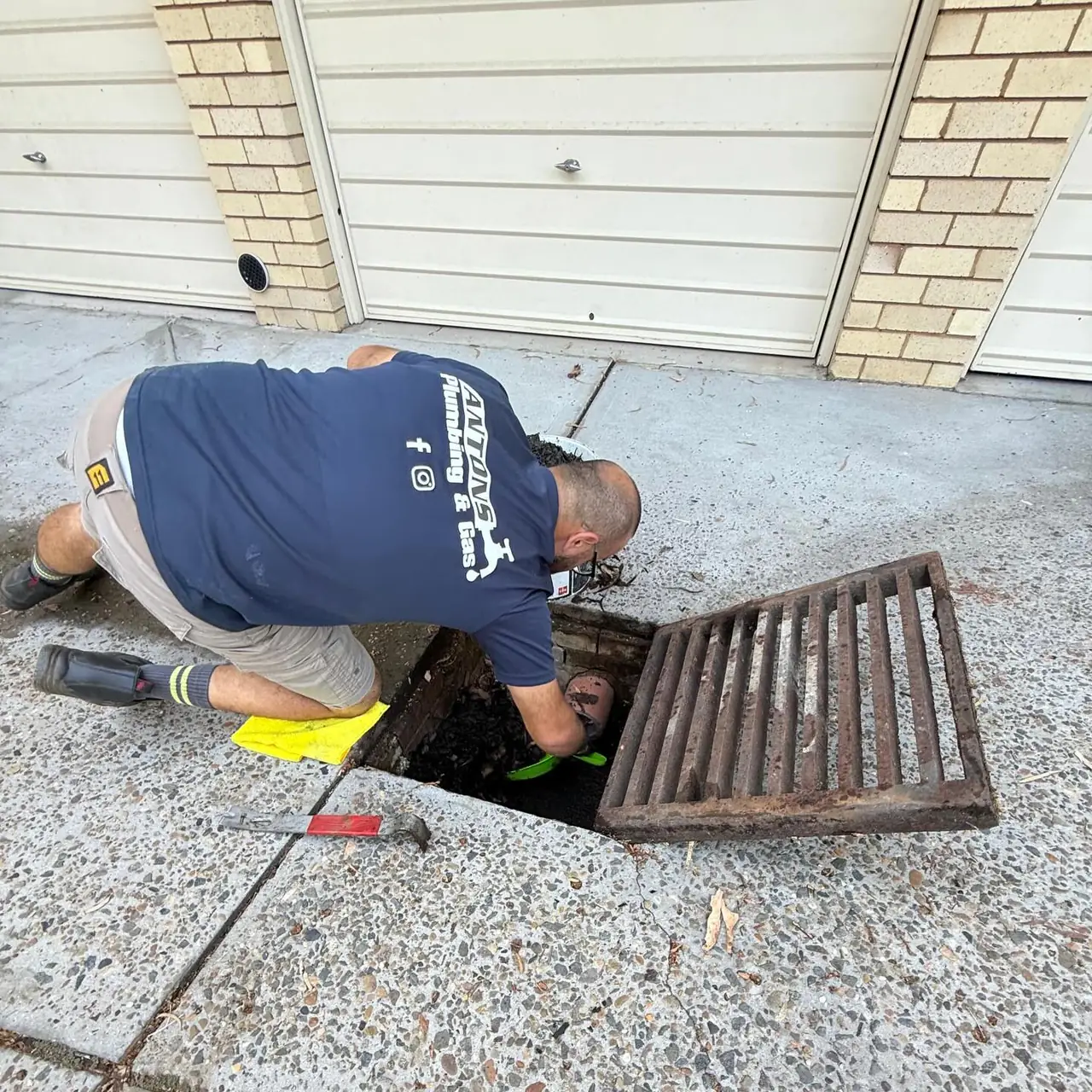
The hardest leaks are rarely the ones spraying in plain sight. A hidden leak may show itself as a meter that moves overnight, a damp smell in one room or pressure that no longer feels normal. When we investigate, we do not begin by choosing a wall to open. We begin by testing whether the clues agree.
Antons Plumbing & Gas operates The Northern Beaches Plumber under NSW contractor licence 210933C. Our process uses meter behaviour, isolation, pressure, moisture and accessible pipework to narrow the next inspection or repair step.
The clues we take seriously
Moisture does not automatically mean a leaking water pipe. Roofing, condensation, failed waterproofing and outside drainage can create similar marks. Timing helps us separate those possibilities. A patch that grows only after rain tells a different story from a meter that moves while every fixture is off.
When customers call us, we ask about:
- unexplained movement on the water meter;
- a sudden change in water use or the bill;
- damp patches, mould, lifting finishes or musty odours;
- running-water sounds when nothing is operating;
- reduced pressure at several fixtures;
- warm or wet areas on a floor; and
- recent renovation, garden or plumbing work.
We also ask whether another apartment or neighbouring area is affected. That detail can change which service should be isolated first and who needs to provide access.
The meter check we use as a starting point
A controlled meter check can confirm that water is moving when the property should be still. Sydney Water recommends turning off water-using fixtures and appliances, recording the reading, waiting at least one hour without using water and checking again. Its official guide to spotting and fixing water leaks explains the steps and the owner’s responsibility for private plumbing.
Before testing, account for toilets, irrigation, washing machines, dishwashers, ice makers and automatic refill systems. Do not switch off equipment if you do not understand how it operates. Record:
- the starting and finishing readings;
- how long the test ran;
- whether all occupants avoided water use;
- where moisture or sound seems strongest; and
- whether weather conditions changed.
A changed reading confirms possible ongoing use; it does not name the pipe or pinpoint the location. That distinction prevents a useful test from becoming an overconfident diagnosis.
How we narrow the search without guessing
We work from broad evidence towards a smaller area. Depending on the property and symptoms, that can mean inspecting visible fixtures and connections, isolating accessible sections, assessing pressure and comparing moisture in likely locations. Pipe material, layout and access determine which checks are worthwhile.
No tool sees through every surface or guarantees an exact result in every building. We explain the limits of the evidence before recommending intrusive access. Our leak detection service describes this evidence-led process. If the fault is already visible at a tap, toilet, shower or exposed pipe, general plumbing repairs may be the more direct route.
If water is actively spreading near electrical equipment, keep clear. Use the property’s isolation only when it is safe and familiar. For uncontrolled water, follow our urgent plumber guidance and give us the complete address and immediate safety details.
Why Northern Beaches properties require context
In Frenchs Forest and Forestville, sloping ground, mature trees, under-house areas and longer pipe runs can shape the investigation. In a Manly apartment, shared services, basement access and strata contacts may matter more. We ask about the building because a test without property context can point in the wrong direction.
What we want you to know at the end
A useful leak assessment should leave you with three things: the evidence found, the limits of what has been confirmed and the next justified action. That may be a targeted repair, another test or access to a specific area. It should not be a vague instruction to start opening finishes everywhere.
For leak detection across the Northern Beaches, call 0493 824 176. Calls are accepted 24/7, and we confirm current coverage and availability after reviewing the property, symptoms and access.
Questions to settle before approving the work
A meter observation is a starting point, not a pipe location. Account for automatic water uses and record the test conditions before discussing leak detection. Ask the plumber what evidence supports the next test and what remains uncertain. This helps avoid opening a wall or digging a lawn based solely on a changed meter reading.
Frequently asked questions
Does a moving meter pinpoint a hidden leak?
No. It indicates water movement, which may be legitimate use or leakage. Check automatic uses before treating it as evidence of a fault.
Can dampness come from something other than plumbing?
Yes. Rain entry, drainage, condensation and waterproofing faults can create similar marks. Timing and location help direct the investigation.
Should I open a wall where the damp patch appears?
Wait for assessment. Water can travel away from its source, and opening finishes at the wettest point may miss the fault.
What should I record before a leak assessment?
Record when the area becomes wet, recent weather, water use and any meter observations. Safe photographs of changes can help.
Can leak detection guarantee no digging or opening?
No. Testing may narrow the search, but pipe access and confirmation can still require targeted opening. Ask what each test can establish.
What if the leak is close to electrical equipment?
Keep people clear and seek urgent help. Do not touch wet switches, appliances or electrical components to investigate the plumbing.
Will fixing the pipe also repair the damaged finishes?
Usually these are separate scopes. Clarify who handles drying, cabinetry, flooring or wall repairs after the source is addressed.
Can an intermittent leak be missed during a visit?
It can be harder to reproduce. Explain the usual timing and conditions; do not deliberately cause more damage to demonstrate it.
Does a higher bill prove a pipe has burst?
No. Changes in consumption and billing can also affect cost. Compare actual usage and observations before deciding what to test.
Will insurance pay for the investigation?
Cover depends on the policy and circumstances. Contact the insurer and keep records; a plumbing diagnosis is not a coverage decision.